 Carli
Carli
Carli
Carli
Morocco can be overwhelming for a first time visitor. This Morocco travel guide will help you know what to expect before visiting Morocco.

Some of the links in this post contain affiliate links. What does that mean you ask? I may earn a small commission, but you won’t pay any extra. These links also help fund and support my page.
Where is Morocco?
Morocco is located in the northwest corner of Africa with the Atlantic Ocean on the west coast and Spain across the Strait of Gibraltar. Morocco also includes a portion of the Sahara Desert.
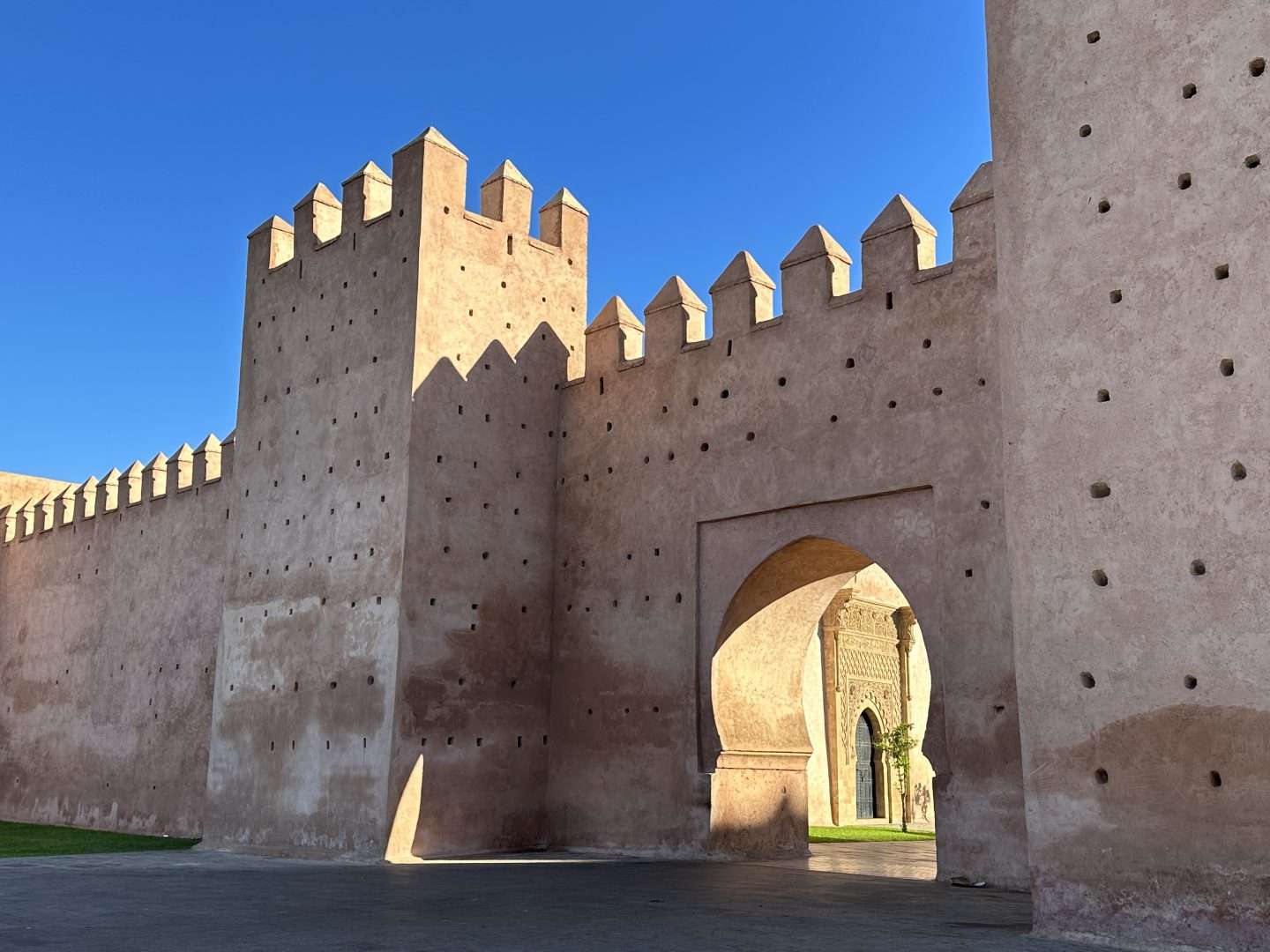
Morocco Travel Guide: How do you get there?
Plane
There are 3 major cities for international arrival. Rabat, Casablanca, and Marrakesh. Each offers daily flights in or out of Morocco, with many transferring through Europe.
Ferry
Northern Morocco and Tangier are most accessible via short ferry to/from Southern Spain or Gibraltar. This ferry typically only takes an hour from Tarifa Spain to Tangier.
Train
Morocco has one of the best train infrastructures within Africa. For traveling within the country, the train is a very inexpensive, generally reliable, and fairly easy to navigate option.
- A first class ticket from Rabat to Fes cost approximately $12 USD
- A first class ticket from Fes to Marrakech cost approximately $26 USD

Morocco Travel Guide: What languages do they speak?
The official languages are Arabic and Berber. Because Morocco was under French rule until the mid-1950s, French is also widely spoken throughout the country. In the larger, more tourist populated cities, you will find more English speakers. In Northern Morocco, due to the proximity to Spain, you are likely to also find Spanish speakers.
Morocco Travel Guide: When is the best time to visit Morocco?
Being located in a (mostly) desert climate Morocco can get extremely hot during the day in the summer. The ideal time to go is spring or fall when the temperature isn’t as high.
I visited over American Thanksgiving (late November) and had very comfortable weather. in Fes near the Atlas Mountains, you can expect the weather to be in the mid to high 60s in November . Further south in Marrakesh, the daytime temps were in the mid 80s. The weather cools off significantly at night, so bring a jacket or layers.
What is the culture like in Morocco?
Morocco is an Islamic country, meaning around 99% of the country follows the teachings of Islam. You’ll notice the calls to prayer multiple times throughout the day and see the various mosques within each city. Although it a muslim country, Morocco is not as conservative as other Arab nations. Women are not required to wear a hijab or have their hair covered. You’ll see a mix of local women that both do and do not wear head coverings. Homosexuality is considered illegal in Morocco, but I have gay friends that have visited without issue.
Morocco has a rich history that dates back to the 8th century and earlier. The country is well known for its beautiful, highly decorative architecture from the 13th century and beyond. Here you’ll find intricate painting, detailed woodworking, mosaic tiles and plaster carvings throughout the historic buildings.

Morocco Travel Guide: What to wear in Maroc?
Full head and face coverings are not required for women that travel Morocco. That said, you should still dress conservatively, especially in the old towns. For women, I recommend longer skirts and tops with more coverage to avoid stares or comments.

What is the currency of Morocco?
The official currency is the Moroccan Dirham. The exchange rate varies, but typically sits around 10:1, so 10 dirham to 1 dollar. Cash is still the primary form of payment in Morocco. Some of the larger shops, especially the carpet vendors, now accept credit cards, but most of the smaller shops and restaurants only take cash. In the larger Moroccan cities, some shops will also take euros, but it is best to have local currency on hand.
Morocco Travel Guide: What should I expect to spend in Morocco?
Morocco is very inexpensive once you arrive. The flights are easily the most expensive part of the travel, but you can have an incredible trip on any budget in Morocco.
Flights to Morocco can end up cheaper than Europe. My flight that flew direct from Seattle to Paris, then Paris to Rabat was $400 cheaper than if I had flown only to and from Paris for the same time period.
Lodging
The best way to experience Morocco is to stay in a riad versus a hotel. A riad is like a small boutique hotel. The main floor will have tables and seating for meals, and usually a common room (or two). You’ll typically find 2-3 floors above that with rooms surrounding a central atrium. Finally, there is a shared rooftop. Usually, the riad has no more than 10-12 rooms.
There is a strong cultural norm to sit and have mint tea (see below to learn more about the tea) when you check in. Your riad host will also share information about where you are staying, what to do in the city etc. Just know that when you check in, it is not in and out like at a hotel. This process might take 30-60 minutes, so build that into your timeline.
Pricing can vary from $40-100 or more per night for a highly rated but mid-budget riad. Prices for my stays are below in USD:
- Rabat: $66/night
- Fes: $37/night
- Marrakesh: $109/night (split with a friend)


Food
You can very easily spend $15-20 or less for food per day during travel in Morocco. Most riads will include a very large breakfast in the price per night. Lunch from a sidewalk cafe or street vendor can cost $3 USD for a full meal. For dinner at a mid-tier rooftop restaurant will run between $12-18 per person for an entree and bottle of water.

Grand Taxis
The grand taxi pricing varies per city and distance. You can spend anywhere from $5–20 per ride. Always negotiate with your cab driver ahead of time! If you’re able, pre-book your cab with your hotel or riad to/from the airport or train station.
Tipping
There isn’t a customary tipping amount like there is in North America. For restaurants, it is customary to round up the bill, preferably in dirham. For tours, tips for your guides (and/or drivers) are welcome.
Shopping
Morocco is the place to go for housewares. You can find everything you need to help furnish your space: dishware, leather, light fixtures, blankets and best of all RUGS.
- Small bowls will usually run about $2-3/bowl.
- Larger metal lamps or lampshades can run between $50-80.
- Small rugs you can pick up for $40-50 per rug, where as a larger 4×8 rug you might pay $600 or more. If you are at a larger shop, shipping can be negotiated into the price.
Don’t forget to pick up a caftan (or two) while visiting. For a simpler caftan you can find some as low as 70-80 dhm ($7-8) if you’re out of the main shopping area, otherwise you’ll pay closer to 120-150 ($12-15). The more intricate and detailed the caftan, the higher the price.
Bargaining is a huge part of Moroccan culture which does not fit with my midwest upbringing. I love a good deal, but I absolutely hate negotiating. Most people say to start as low as ⅓ or ½ of the cost presented by the vendor and work your way up to a compromise. Negotiating gives me anxiety, so I honestly only try to buy things I truly want for myself (or as a gift) and figure out what is the maximum price that I wouldn’t want to go above.
Rules for shopping:
- If you are buying more than 1 item from a store try to get a discount for buying multiple items.
- The stores in the souks (the main market within the medina) expect you to negotiate. If you are at shops that are outside of souks, and in a different part of the medina, they may not be willing to negotiate as much (or at all).
- Don’t feel pressured into buying something, you can always look and come back to compare prices or products.


Morocco Travel Guide: Food and drinks
Mint Tea
Mint tea is a staple of Moroccan culture. It is served at every hotel (or riad) upon arrival, and almost every meal no matter the outside temperature. Mint tea comes either sweetened or unsweetened, and you can let your host (or restaurant) know which way you prefer it.
Upon arrival to my first riad in Rabat, I was greeted with mint tea that was so sweet it was like drinking mint syrup. It wasn’t until exploring the next day and having food at a local food stand that I tried it unsweetened and for the rest of the trip was able to say “sans sucre” (or no sugar). This made my tea experience much more enjoyable for the rest of my travels.


Drinking
Morocco is not a “dry” country, alcohol is legal, however it is uncommon to find bars or restaurants with alcohol. You are more likely to find places to drink in cities that have higher tourist populations.
Of the 3 larger cities I visited in Morocco, Marrakesh had by far the most apparent places to grab a drink. There are even rooftop bars that advertise 2 for 1 happy hour drinks.
You’re more likely to find bars and restaurants that have alcohol outside of the medina (or old town) and in the “new town”. Once you leave the walls of the old town of Marrakesh and venture into the new town, you’ll find a number of bars and restaurants. Some of which even stay open late into the night.
Drinking is not cheap. While you can find some very inexpensive places to eat in Morocco, there is an upcharge for drinks. You can expect a glass of wine to rival US pricing ($10-14/glass).
Food
As a picky eater who never truly experienced Moroccan food prior to going to Morocco, I can assure you, Moroccan food is great.
Moroccan breakfast is very interesting. It typically consisted of 4-5 types of bread or pastries, yogurt, an egg, mint tea and sometimes a soup. Needless to say, you’ll have plenty to eat.
You pretty much can’t go wrong with a tagine or couscous when in Morocco. A tagine is a dish made in a specialty conical clay pot that slowly cooks the food. Usually this will feature a type of meat with spices and other smaller foods (such as olived or prunes) to accentuate the flavors and be served with bread.
Make sure to partake in the street food. Beware of the street food in Marrakech, before you know it you’ll have ordered 6-8 dishes and spent $30/person, but the food is so good you won’t even care.
Fresh fruit and fruit juice stands are very popular throughout Marrakech. This is a great way to have a refreshing beverage in the heat.
Try the Kefta, which is like a Moroccan hamburger. Kefta is a ground beef or lamb that is put together in a patty and served either as kebabs or on flatbread.


Morocco Travel Guide: Safety in Morocco
Overall, Morocco is a safe country to visit. I traveled for the first 4-5 days alone as a solo female traveler before meeting up with a girlfriend in Marrakech for the second half of the trip.
If you are a woman traveling be prepared to have the shopkeepers and street vendors yell at you for attention. I was regularly called “Shakira” and my friend was “Ginger Spice” when walking around.
Guidebooks (and my personal experience) will tell you that your biggest issues are with scammers trying to lead you the wrong way in the medina and then have you pay them to give you directions.
I only ever experienced this while in Fes and it was almost always teenage boys, or younger men telling me that the direction I was going was “closed”. Usually when this happened I would just ignore them and walk in a different direction. While this was annoying, I never felt truly unsafe and they wouldn’t follow me once I went in a different direction.
Morocco Travel Guide: Using your phone in Morocco
I STRONGLY recommend paying for an international data plan while traveling in Morocco, especially if you are traveling alone. However, even if you are not, the old town has such small winding, maze-like pathways that make it very easy to get lost or turned around. Having google maps on your phone is a huge asset.
If you are using an international plan through your cell phone carrier, the service while visiting Morocco works very well. Please check costs and service availability with your local cell phone provider. E-sims are also a great way to have low cost coverage.
For more information on using your phone while traveling abroad read: How to Use Your Phone while Traveling Internationally
Morocco Travel Guide: Fun facts about Morocco
- With the exception of one mosque in Casablanca, mosques are not accessible to non-muslim people. That said, you can still admire the exterior entrances and tower that accompany each mosque.
- Be prepared to hear the call to prayer ring out throughout each city 5 times a day. This will be played from a speaker at the top of each tower.
- Green is the color of Islam. All religious buildings have green tiled roofs to signify it is a building of Islam.
- Within 48 hours of my arrival into Morocco I was told by multiple locals that Morocco was one of the first countries to recognize United States independence during the revolution against Great Britain. The locals seemed proud to share their connection and support of the US.
- Street cats are everywhere throughout Morocco. Many are taken care of by the locals and as a result are also friendly.
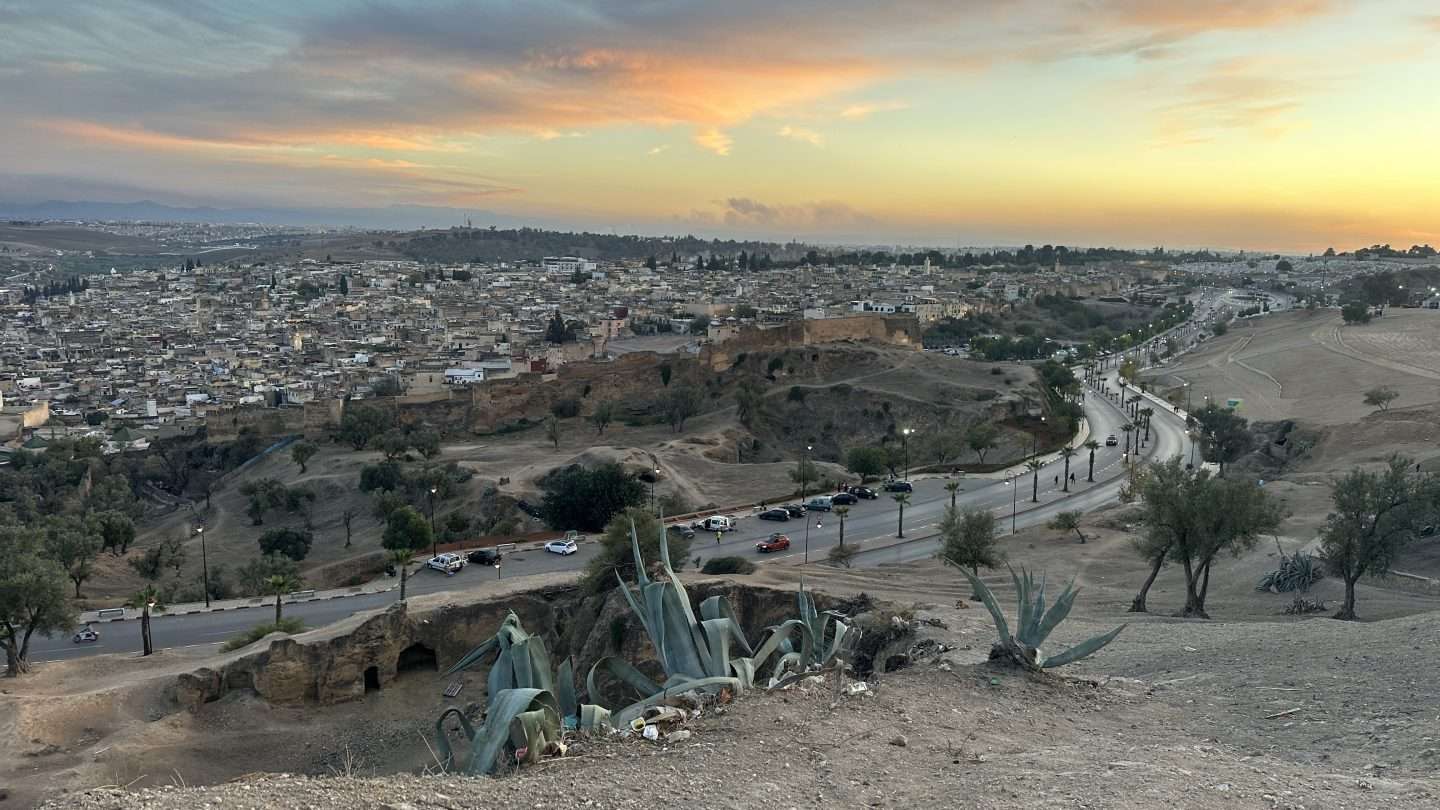
Additional posts on traveling in Morocco:


Quick Travel Links
Below are affiliate links. What does that mean you ask? I may earn a small commission, but you won’t pay any extra. These links also help fund and support my page
- Find accommodations
- Book day tours & shuttle services
- Rental Cars
- Travel Insurance
- E-sims for international travel
- Shop my Amazon storefront
- Follow me on Instagram
Find more of my favorite booking sites
Learn about using your phone internationally

I’m a Seattle based traveler that has been to over 40 countries and all 7 continents. I am a frequent solo traveler, visiting over 20 countries solo.
I consider myself a mid-budget travel generalist, meaning I like to do a little bit of everything from adventure activities and museums, to beach days and historic walking tours. Every now and then I’ll splurge on premium cabins or high end hotels, but most of the time I’m economy (probably Comfort+) and finding deals for well rated hotels.
